Free tiers in AI: who offers one, and what it signals
Across 6,278 live AI tools, 64.7% offer a free tier — but the range by market runs from 90% to 11%. The split is not about the product. It is about who signs the invoice.
16 September 2026 · 8 min read · Data frozen 16 September 2026
Whether to give the product away is the first real decision an AI company makes, and it is made under worse conditions than it used to be, because every free session now costs money in inference. Across 6,278 live tools, the answer splits almost perfectly along one line — and it is not the line most founders expect.
The short version
- 64.7% of live tools offer a free tier — 4,064 of 6,278.
- The range by market is enormous: 90.2% in Music, 10.9% in Healthcare. An eight-fold spread inside the same catalog.
- The split is not about product type. It is about who signs: markets selling to individuals give the product away, markets selling to budget holders do not.
- A free tier does not protect you. Free tools die at 7.1%, freemium at 8.4% and paid at 9.2% — close enough that pricing model tells you almost nothing about survival.
Freemium is the default, and that is a choice nobody made
6,278 live tools with a pricing model on record. Falcoscan catalog, 16 September 2026.
3,467 of 6,278 products are freemium. That is not a considered industry consensus so much as an inherited habit: the playbook that worked for software with near-zero marginal cost got copied into a category where marginal cost is real and scales with exactly the users you are not charging.
The split is about who signs the invoice
Sorted by market, the free-tier rate does not divide along any product line you might expect. It divides along the buyer.
Percentage of live tools with a known pricing model that offer a free tier. Falcoscan catalog, 16 September 2026.
At the top — Music, Coding, Design, Agents, Image — the person who tries the product is the person who decides to keep it. There is no procurement step, so the free tier is not a marketing tactic, it is the evaluation process. A coding tool that cannot be run against your own repository before you pay will not be considered at all.
At the bottom — Healthcare at 10.9%, Human Resources, Legal, Real Estate, Security — the person who would try it cannot approve it, and often cannot legally put real data into it to evaluate it. A free tier in those markets buys you individual enthusiasm from someone who has no budget, while costing you inference on every session.
Free tiers do not protect you, and neither does charging
The most common argument for charging early is that it proves demand and funds the compute. The most common argument against is that it kills adoption. The catalog supports neither strongly.
Share of tracked tools on each pricing model that no longer resolve to a working product. Falcoscan liveness sweep, 16 September 2026.
Paid tools die slightly more often than freemium, which die slightly more often than free. The spread across all three is two percentage points — far too narrow to build a strategy on. If charging from day one were the discipline it is often described as, this chart would look different.
The most plausible reading is selection rather than cause. A product confident enough to charge immediately is frequently one that needs revenue immediately, and a product given away by a well-funded team is not necessarily a healthier business — it is just a better capitalised one. Pricing model, on its own, is not a survival signal.
What the pricing model does correlate with
| Pricing | Tools | Opportunity | Saturation | Wrapper risk | Rating |
|---|---|---|---|---|---|
| Free | 605 | 63.7 | 35.8 | 21.5 | 4.18 |
| Freemium | 3,467 | 61.6 | 41.7 | 27.8 | 4.22 |
| Paid | 2,206 | 65.3 | 35.4 | 23.7 | 3.91 |
Mean opportunity, saturation and wrapper-risk scores for live tools on each pricing model. Falcoscan catalog, 16 September 2026.
Two things stand out. Freemium products sit in the most saturated markets (41.7 against 35.4 for paid) and carry the highest wrapper risk (27.8 against 21.5 for free). That is the same finding from two directions: the markets where giving the product away is normal are the markets where the product is easiest to build, and therefore the ones with the most competitors.
Paid products score highest on opportunity (65.3) and lowest on saturation — because the markets that will pay from the start are the markets that are hard to enter. The pricing decision, in other words, is mostly downstream of the market choice. You are not choosing freely; the buyer chose for you.
The case for genuinely free
605 products in the catalog charge nothing at all, and they are not a rounding error — they include some of the highest-opportunity products we track. Open weights, research tools and infrastructure released to build an ecosystem rather than revenue.
Meta open-source AI model powering thousands of applications
Open-source AI software engineering agent from Princeton
This is the one pricing decision in the data that is strategic rather than inherited. Free here is not a funnel — it is a distribution play by an organisation monetising somewhere else entirely, and it is worth recognising when you are competing with one, because you cannot out-price it.
How to decide
Start from the buyer, not the benchmark. If the person who evaluates your product is the person who pays, a free tier is not optional and you should budget its inference cost as a marketing line. If evaluation goes through someone who cannot approve spending, a free tier will generate enthusiasm you cannot bank, and a structured pilot is a better use of the same money.
And whichever you choose, do not mistake it for a moat. The failure data says the pricing page is the least consequential decision on this list. What matters is which market you are in — the market you pick sets the pricing, the competition and most of the odds.
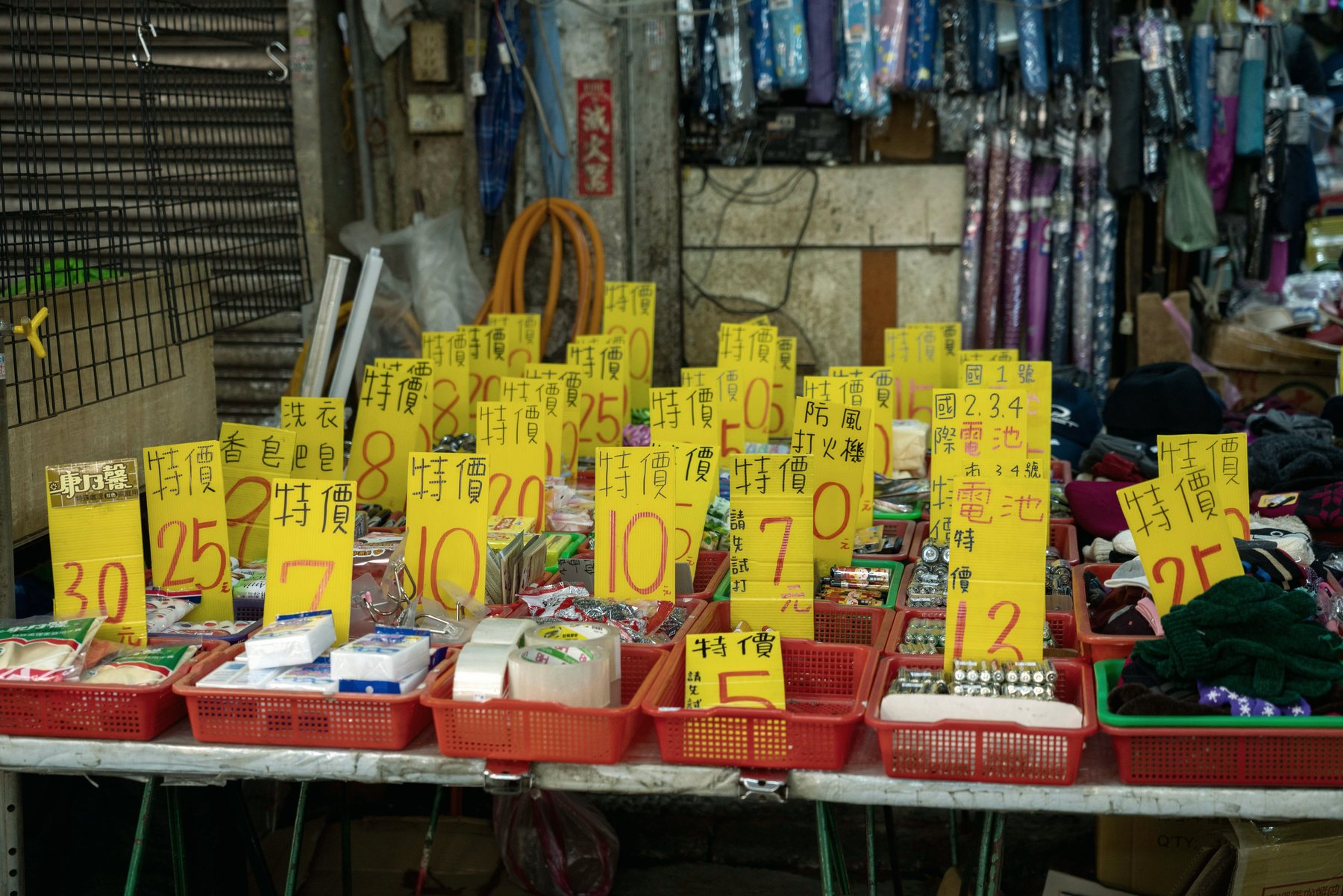
Photo: Jimmy Liao / Pexels. Colour-graded for Falcoscan.
Citing these numbers
Every figure here is from the Falcoscan catalog as it stood on 16 September 2026, and is frozen at that reading. Later changes to the catalog will not alter this page, so a number you quote today will still say the same thing when someone checks it.
Falcoscan, “Free tiers in AI: who offers one, and what it signals”, 16 September 2026. https://falcoscan.com/articles/free-tiers-in-ai-who-offers-one